What Happens During a Preliminary Hearing for Felony Charges in Colorado?

A felony charge does not mean the state has proven anything yet. In some Colorado cases, the prosecution has to show a judge early on that it has enough evidence to keep going at all. That proceeding is the preliminary hearing.
It is short, the standard is low, and most defendants do not win outright. It is still one of the most useful hearings in a felony case, and knowing why can change how you approach it.
What Is a Preliminary Hearing in a Colorado Felony Case?
A preliminary hearing is a probable cause hearing. The judge is not deciding guilt, hearing your side of the story, or weighing whether the state can win at trial.
The single question is whether there is probable cause to believe a felony was committed and that you committed it. If the judge finds probable cause, the case is bound over for further proceedings. If not, charges can be dismissed or reduced.
The hearing also serves a purpose the statute does not mention: it is the first chance to see the state’s evidence tested in open court, under oath, on the record.
Who Is Entitled to a Preliminary Hearing in Colorado?
Not everyone charged with a felony gets one. Under C.R.S. § 16-5-301, the right depends on the level of the charge.
You have the right to demand a preliminary hearing if charged with:
- A class 1, 2, or 3 felony
- A level 1 or level 2 drug felony
If charged with a class 4, 5, or 6 felony, or a level 3 or 4 drug felony, you generally do not have that right, unless one of these applies:
- The offense requires mandatory sentencing
- The offense is a crime of violence under C.R.S. § 18-1.3-406
- The offense is a sexual offense under part 4 of article 3 of title 18
- You are in custody for the offense in question
Defendants who are not entitled to a preliminary hearing instead participate in a dispositional hearing, which exists for case evaluation and possible resolution rather than testing evidence.
One more wrinkle: if your case came from a grand jury indictment rather than a complaint or direct information, a preliminary hearing generally is not available, because the grand jury already made a probable cause finding.
How Quickly Does a Preliminary Hearing Have to Happen?
Two deadlines matter, and the first one is short.
- The request. Either side generally must request the hearing within 7 days after you are brought before the court on the felony complaint, and before a plea is entered. Miss it and the right can be treated as waived.
- The hearing. Once requested and set, it generally must be held within 35 days, unless the court finds good cause to continue it.
If you are in custody and the court does not hold the hearing within 35 days, the remedy is release from custody rather than dismissal of the charges. Many defendants waive the 35-day timeline on purpose, to give the defense more time to prepare, review discovery, and get the most out of the hearing.
What Does the Prosecutor Have to Prove?
Very little, comparatively. Probable cause is a far lower bar than beyond a reasonable doubt, and the rules tilt toward the state in several ways:
- The judge views the evidence and draws inferences in the light most favorable to the prosecution
- The rules of evidence are relaxed, and substantial hearsay is allowed
- The prosecution does not have to present every witness or its full case
- Conflicts in the evidence are generally resolved in the state’s favor at this stage
This is why prelims are hard to win. It is also why losing one says less about your case than people assume.
What Actually Happens During the Hearing?
In practice, most Colorado preliminary hearings look similar and take well under an hour.
- The prosecutor calls a witness, frequently just the investigating officer, who summarizes the investigation
- Reports, photographs, video, or lab results may come in
- Your attorney cross-examines the state’s witnesses
- The defense may introduce evidence, though it usually does not
- Both sides argue whether probable cause exists
- The judge rules, often from the bench
You will not testify. The prosecution cannot call you as a witness. The scope of cross-examination and any defense evidence is limited to the probable cause question, so this is not the place to try your defense.
What Are the Possible Outcomes?
The judge can:
- Find probable cause on all counts, and the case proceeds
- Find probable cause on some counts and dismiss the others, which can lower your exposure significantly
- Find no probable cause, and those charges are dismissed
A dismissal at this stage does not necessarily end things forever, since the state may be able to refile depending on the circumstances. Even so, knocking out a top count can reshape the sentencing range and the negotiation entirely.
Should You Waive Your Preliminary Hearing?
Sometimes waiving makes sense, and sometimes it gives away real value. Considerations include:
- Locking in testimony. Officers and witnesses testify under oath early, and inconsistencies later become useful.
- Seeing the case. You learn the state’s theory and how its witnesses hold up.
- Speed. Waiving can move a case toward a favorable resolution faster.
- Negotiation. Prosecutors sometimes improve an offer in exchange for a waiver.
This is a strategic call that depends on the evidence and your goals, and it should be made with counsel rather than by default.
Your Preliminary Hearing Deadline Is Already Running
The 7-day request deadline arrives before most people have even absorbed the charges. That timing alone is a reason to get advice quickly.
Dawson Law handles felony cases throughout Boulder and the Front Range, including preliminary hearings and the motions that follow. Contact us to talk about your charges and whether a preliminary hearing helps your case.
Author Bio
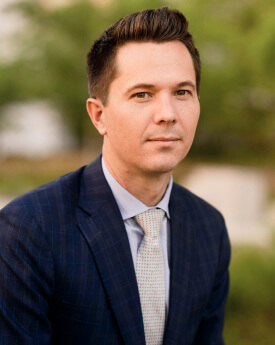
Ryan Dawson-Erdman is the founder of Dawson Law Office, a top-rated criminal defense firm located in Boulder, Colorado. As an aggressive advocate, Ryan focuses his practice on defending against serious criminal charges, including sex crimes, Title IX violations, and federal offenses. He has taken nearly a dozen cases to jury trial, showcasing his exceptional litigation skills. His legal skills have earned him numerous accolades over the years, including being selected to Super Lawyers Rising Stars for 2022-2024.
A Colorado native, Ryan attended the prestigious Gerry Spence Trial Lawyers College to further refine his courtroom abilities. He earned his J.D. from Loyola University New Orleans and his B.A. from the University of Colorado Boulder. Ryan is an active member of the National Association of Criminal Defense Lawyers and the Colorado Criminal Defense Bar. His firm provides tenacious representation for all criminal charges in Boulder, Denver, and the surrounding areas.