Do I Need a Lawyer After a Rideshare Accident in Colorado?
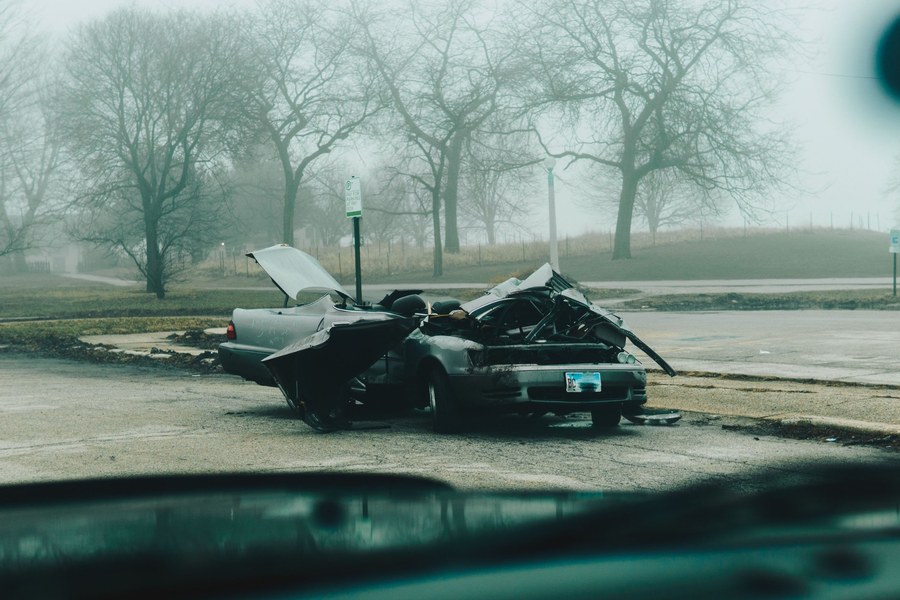
A crash involving an Uber or Lyft looks like an ordinary car accident until you try to file the claim. Then you discover the coverage depends on what the driver’s app was doing at the moment of impact, the driver is not technically an employee, and a commercial insurer is handling the file.
Not every rideshare case needs an attorney. But these claims carry problems that ordinary crashes do not, and knowing which ones apply to you is the difference between a fair result and a cheap one.
How Does Rideshare Insurance Work in Colorado?
Colorado regulates Uber and Lyft as transportation network companies under C.R.S. § 40-10.1-604. The statute divides a driver’s time into periods, and coverage changes sharply between them.
- App off. The driver is an ordinary motorist. Only their personal auto policy applies.
- App on, waiting for a request. Required coverage is at least $50,000 per person, $100,000 per incident, and $30,000 for property damage.
- Ride accepted, driving to pick up. The $1 million commercial policy applies.
- Passenger in the vehicle. The $1 million policy applies for the entire prearranged ride.
Since August 2022, the statute also requires uninsured motorist coverage of at least $200,000 per person and $400,000 per occurrence for drivers and riders during a prearranged ride. That matters when the at-fault driver is someone else carrying minimum limits or no insurance at all.
Why Does the Driver’s App Status Matter So Much?
Look at the gap. A crash during Period 1 may have $50,000 available. The same crash moments later, after the driver accepts a ride, may have $1 million.
That difference gives insurers a strong reason to characterize the timing favorably to themselves, and app status is not something you can verify from the roadside. It lives in company records.
This is the single most common reason a rideshare claim needs professional help. Establishing which period applies can require the trip log, the driver’s app data, and sometimes a formal demand for records. A seriously injured passenger has a lot riding on which policy is found to apply.
Can You Sue Uber or Lyft Directly?
Usually not for the driver’s negligence. Both companies classify drivers as independent contractors, which generally blocks the vicarious liability theory that would apply to an employer.
The practical effect is that you are typically pursuing the commercial insurance policy rather than suing the company itself. Claims against the company directly tend to involve different theories, such as negligent hiring or retention, and they are harder to bring.
For most injured people this distinction matters less than it sounds, because the money comes from the same policy either way. It does change how the case gets built.
Who Can Recover After a Colorado Rideshare Crash?
Several groups can have a claim:
- Passengers, who are almost never at fault and are usually covered by the $1 million policy
- Drivers of other vehicles struck by a rideshare driver
- Pedestrians and cyclists
- Rideshare drivers themselves, when another motorist caused the crash
- Passengers in other vehicles
Passengers are in the strongest position, since fault almost never attaches to someone sitting in the back seat. That does not mean the claim pays easily.
How Long Do You Have to File a Rideshare Injury Claim?
Colorado gives three years for claims arising out of the use or operation of a motor vehicle, which covers rideshare crashes. Most other injury claims get two years.
Waiting is still costly. App data, dashcam footage, and vehicle evidence do not last three years, and the practical window for building a strong case is far shorter than the legal one.
If a government vehicle was involved, a much shorter notice deadline applies, measured in months rather than years.
When Do You Actually Need a Lawyer?
Some claims are straightforward enough to handle yourself: no injuries, minor property damage, clear fault. Consider getting help when any of these are present:
- You were treated at a hospital or needed follow-up care
- Your injuries have not fully resolved
- The app period is disputed or unclear
- Multiple vehicles or multiple injured people are involved, since claimants may have to share limits
- Fault is contested, or the insurer suggests you were partly responsible
- The adjuster wants a recorded statement early
- You are a rideshare driver caught between your personal insurer and the company’s coverage
- An offer arrives quickly, before anyone knows the full extent of your injuries
That last one deserves attention. Fast offers usually arrive before the medical picture is clear, and accepting one closes the claim permanently.
How Does Fault Affect What You Recover?
Colorado follows modified comparative negligence. Your recovery is reduced by your percentage of fault, and if your share is as great as the defendant’s, you recover nothing.
This is why insurers press on questions like seatbelt use or whether you distracted the driver. Assigning you even a portion of blame lowers what they pay, and pushing you to 50 percent eliminates the claim.
What Should You Do After the Crash?
Evidence in these cases disappears faster than in ordinary crashes because so much of it is digital.
- Get medical attention, even if you feel alright at first
- Call the police and make sure a report is generated
- Screenshot the trip in your app, including driver name, times, and route
- Report the incident through the app so it exists in company records
- Photograph vehicles, the scene, and your injuries
- Get contact information for the driver and any witnesses
- Avoid giving a recorded statement before you understand your injuries
That trip screenshot is small and easy, and it is frequently the cleanest proof of app status later.
Getting Help With a Colorado Uber or Lyft Injury Claim
Rideshare claims turn on details most people cannot see from the scene: which coverage period applied, what the trip data shows, and how fault gets divided. Those questions get decided early, often before an injured person realizes they are in play.
Dawson Law handles vehicle crash claims, including rideshare cases, throughout Boulder and Colorado. Talk with a Boulder personal injury lawyer about what coverage applies to your crash, and contact us while the app data and evidence can still be preserved.
Author Bio

Ryan Dawson-Erdman is the founder of Dawson Law Office, a top-rated criminal defense firm located in Boulder, Colorado. As an aggressive advocate, Ryan focuses his practice on defending against serious criminal charges, including sex crimes, Title IX violations, and federal offenses. He has taken nearly a dozen cases to jury trial, showcasing his exceptional litigation skills. His legal skills have earned him numerous accolades over the years, including being selected to Super Lawyers Rising Stars for 2022-2024.
A Colorado native, Ryan attended the prestigious Gerry Spence Trial Lawyers College to further refine his courtroom abilities. He earned his J.D. from Loyola University New Orleans and his B.A. from the University of Colorado Boulder. Ryan is an active member of the National Association of Criminal Defense Lawyers and the Colorado Criminal Defense Bar. His firm provides tenacious representation for all criminal charges in Boulder, Denver, and the surrounding areas.